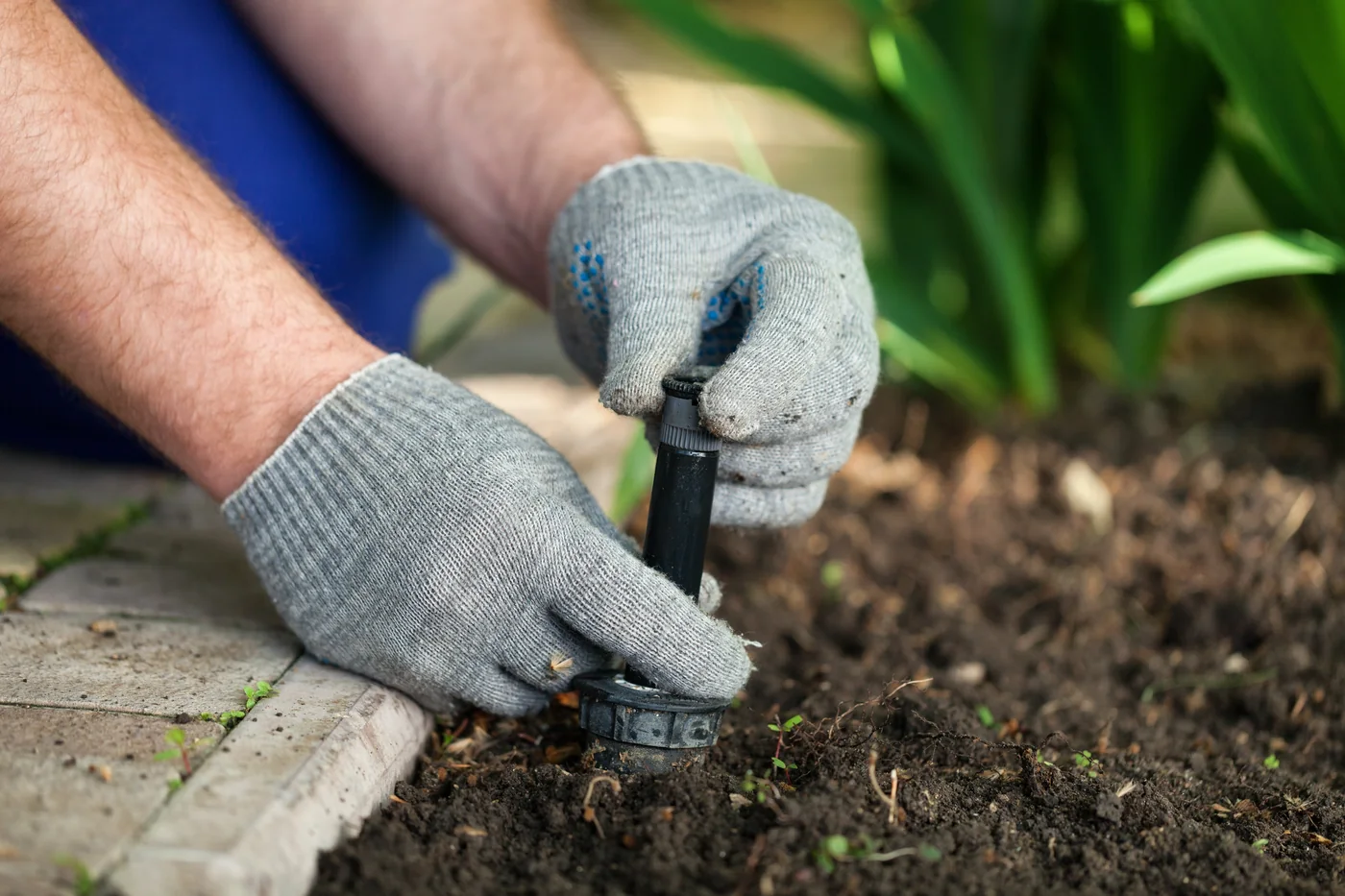
What should you do right now?
Stop the affected sprinkler zone while water is escaping. Then preserve the clues that will help separate a damaged head from a problem below it.
-
Stop the zone
If the controller does not stop the water, use an irrigation shutoff only when you can identify it with certainty. Do not guess at a household, municipal, or backflow valve.
-
Mark the wet location
Place a marker beside the head and photograph where the water appeared before the soil absorbs it.
-
Note the timing
Record whether it leaked while running, briefly after shutdown, or between watering cycles.
If the zone will not stop or water keeps surfacing, do not wait for the next cycle.Schedule sprinkler repair
When does the sprinkler head leak?
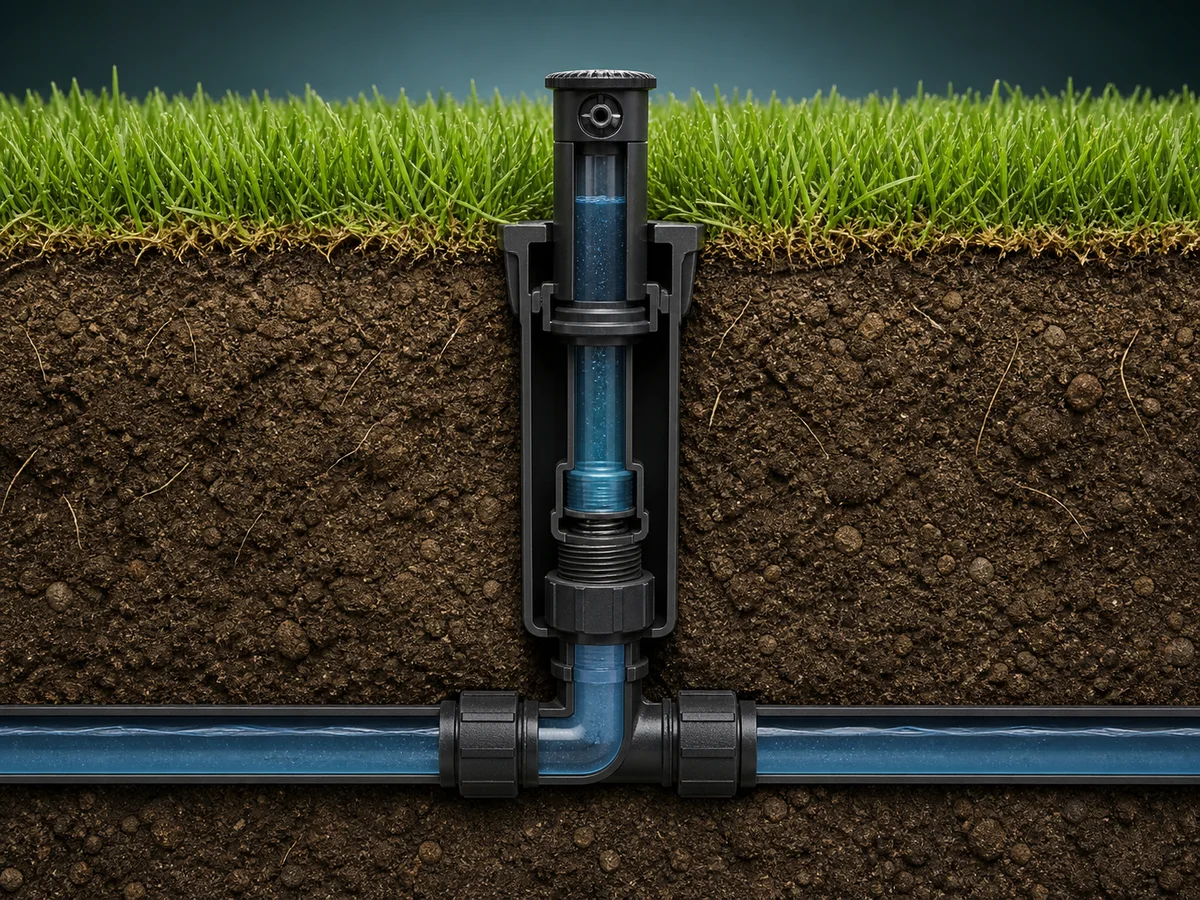
The visible puddle may not sit directly over the failed part. Timing and location tell you where to inspect first.
-
While the zone runs
Vertical spray from the top can begin at the nozzle. Water through a visible crack points toward the head body. Bubbling at the base may come from the head, riser, fitting, or lateral line.
-
Briefly after shutoff
A low head may release the water left in the zone. Normal drainage should slow and stop.
-
Between watering cycles
Water that continues or returns can involve a valve that is not closing or another system problem.
Cannot tell whether the water starts above or below the head?Have us diagnose it
What can you safely check yourself?
Compare the leaking head with its neighbors while the zone runs. If several heads are weak or stay low, stop treating the first visible head as an isolated failure.
Clear visible obstructions
Remove grass or debris that prevents an intact head from rising. Do not dig while the zone is running.
Record the exact parts
Photograph the head, nozzle, markings, spray direction, and neighboring heads before buying anything.
Check whether the base is stable
Expose only enough soil to see the body. Stop if the head or fitting moves, or water bubbles from below.
After any visible correction, run the full zone
The head should rise, cover its intended area, stay off pavement, and remain dry at the base after normal drainage ends. Neighboring heads should still operate as before.
Unsure whether the replacement will match the rest of the zone?Schedule sprinkler repair
When should you schedule sprinkler repair?
Get the system checked when the symptom extends beyond one stable, clearly damaged head.
Water keeps surfacing
The base continues bubbling or water appears away from the head.
The zone will not shut off
Flow continues after the controller stops the cycle.
Several heads are affected
Multiple heads stay low, spray weakly, or stop together.
The problem keeps returning
The head leaks, breaks, or settles again, or compatible parts are unclear.
FAQ
Common questions
A low head may drain briefly after shutdown. Water that continues or appears between cycles can involve a valve that is not closing or another below-grade problem.
The visible head may be cracked, but water can also escape from the riser, fitting, or lateral pipe below it. Expose the area only far enough to identify a stable connection.
Visible debris, a damaged head, or a blocked inlet can affect one head. If several heads stay low, inspect the zone rather than replacing the first head you notice.